Peptide Map is an interactive web application for visualizing peptide structures,
relationships, and biochemical mappings. Researchers can explore peptide sequences,
interactions, and spatial layouts through an intuitive graphical interface.
This tool is designed for students, researchers, and professionals working in
biochemistry, molecular biology, and computational biology.
Features
Interactive 3D body map for exploring peptide injection points
Comprehensive peptide database with detailed information
Personalized peptide recommendations based on your needs
Peptide stack calculator with dosing protocols
Research studies and scientific literature references
Vendor ratings and reviews for peptide suppliers
Sequence-based mapping and biochemical relationships
About Peptides
Peptides are short chains of amino acids that play crucial roles in biological processes.
They can influence hormones, metabolism, tissue repair, and various physiological functions.
This interactive tool helps researchers and practitioners understand peptide applications,
injection sites, and recommended protocols for different therapeutic goals.
Medical injections, regardless of the site, follow a
universal set of principles to ensure safety and
sterility. The following steps are a synthesis of
general medical practice and information from the search
results regarding peptide preparation.
1. Preparation & Sterile Workspace
Gather Supplies: You will need the
peptide vial, bacteriostatic water (a sterile water
with a preservative that allows for multiple uses),
alcohol pads, sterile syringes, and needles (often
an 18-20 gauge needle for drawing and a smaller
25-27 gauge for injecting).
Clean Workspace: Prepare a clean,
clutter-free surface and wash your hands thoroughly.
Inspect: Check the peptide powder
and bacteriostatic water for any cloudiness or
particles. Do not use if anything looks unusual.
2. Reconstituting the Peptide
Sanitize: Wipe the rubber stoppers
of both the peptide vial and the bacteriostatic
water vial with separate alcohol pads and let them
air dry.
Draw Solvent: Draw a volume of air
into the syringe equal to the amount of
bacteriostatic water you plan to use. Inject this
air into the bacteriostatic water vial. Then, draw
the required amount of bacteriostatic water into the
syringe.
Mix: Insert the needle into the
peptide vial and slowly inject the bacteriostatic
water down the side of the vial to avoid forceful
contact with the powder.
Dissolve: Gently roll the vial
between your palms or swirl it until the liquid is
clear and all powder is fully dissolved. Do not
shake the vial vigorously, as this can damage the
peptide molecules.
3. Drawing the Dose
Swap Needles: For comfort and
sterility, attach a new, smaller-gauge needle (e.g.,
25-27 gauge) to the syringe.
Draw Solution: Insert the needle
into the reconstituted peptide vial, turn the vial
upside down, and slowly draw the required dose into
the syringe.
Remove Bubbles: Tap the syringe
gently to push any air bubbles to the top and
carefully push the plunger to expel them.
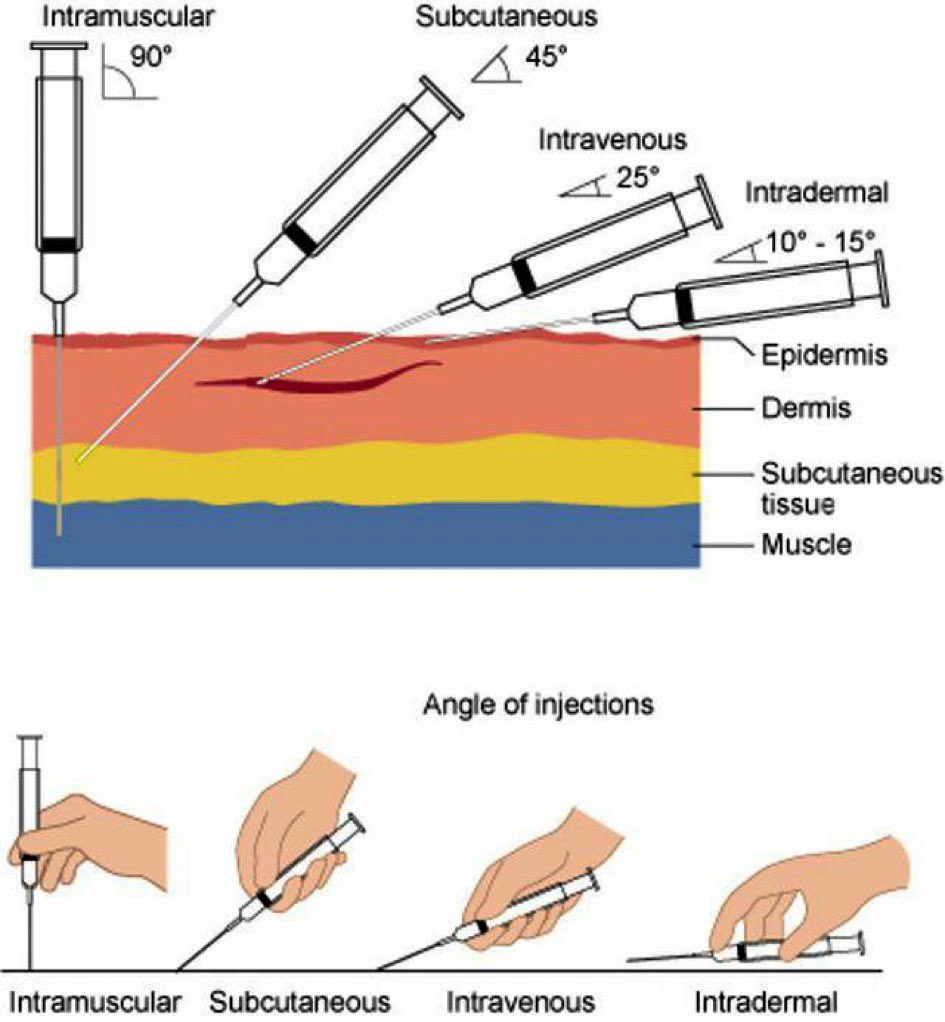
4. Administering the Injection
The injection route is a critical decision made by a
medical professional based on the target tissue. Here
are the general principles for the two main routes
mentioned in your query and the search results:
Injection Route
Description
Common Injury Examples
Key Considerations
Subcutaneous (SubQ)
Injection into the fatty tissue (hypodermis)
just under the skin.
Systemic healing, not for specific deep
tissues.
Slower absorption, systemic effect; suitable
for peptides like TB-500 that work
throughout the body.
Intramuscular (IM)
Injection deep into the body of a skeletal
muscle.
The following steps for reconstituting peptides and
preparing for injection are fundamental and apply to all
injection types. The key variables are the injection
route (subcutaneous, intramuscular, or
ultrasound-guided) and the specific injection site,
which are determined by the nature of the injury.
Required Materials:
Peptide vial (lyophilized powder)
Bacteriostatic water (for reconstitution)
Alcohol swabs/pads
Mixing syringe (1ml recommended, 29g/30g needle)
Insulin syringe for injection (e.g., U-100 for
subcutaneous)
Sterile gloves (recommended)
Step 1: Reconstitution (Mixing the Peptide)
Clean Surfaces: Wash your hands
thoroughly and put on sterile gloves. Clean the tops
of both the peptide vial and the bacteriostatic
water vial with an alcohol swab.
Draw Bacteriostatic Water: Draw the
desired amount of sterile bacteriostatic water into
a mixing syringe. A common volume is 1-2 mL.
Reconstitute the Vial: Insert the
syringe into the peptide vial at a 45-degree angle
and gently inject the water down the side of the
vial to avoid foaming or damaging the peptide
structure.
Mix Gently: Roll the vial gently
between your fingers until the powder is fully
dissolved. Do not shake the vial, as this can damage
the peptides.
Step 2: Calculating Your Dose
This is a critical step. The dose is measured in
micrograms (mcg) of the peptide powder, not the liquid
volume. You need to calculate how much liquid contains
your desired dose.
Formula: Use the formula: (Desired
Dose in mcg / Total Peptide in mcg) × Total Liquid
Volume in mL = Dose in mL
Example: If you have a 10,000 mcg
(10 mg) vial of BPC-157 reconstituted with 2 mL of
water, and you want a 250 mcg dose: (250 / 10,000) ×
2 = 0.05 mL.
Syringe Conversion: On a U-100
insulin syringe, 0.05 mL is equivalent to 5 "units"
or tick marks.
Step 3: Preparation and Injection
Draw the Dose: Using a fresh
insulin syringe, draw the calculated amount of the
reconstituted solution.
Clean the Site: Clean the injection
site thoroughly with a new alcohol swab and let it
air dry.
Administer the Injection: The
injection technique depends entirely on the target
tissue, as detailed below.
🎯 Injury-Specific Injection Protocols
For Tendons & Ligaments (e.g., Patellar Tendonitis,
Achilles Tendinopathy)
Recommended Peptide: BPC-157 is
highlighted for its profound ability to accelerate
tendon and ligament repair by promoting angiogenesis and
collagen formation.
Injection Route: Research supports two
primary methods:
Subcutaneous (SubQ) Near Site: For
peptides like BPC-157, a subcutaneous injection in
the fatty tissue close to the injury site can be
effective for providing systemic and localized
effects. This is generally considered safer for
self-administration.
Ultrasound-Guided Injection: For
precise treatment of stubborn tendinopathies like
Achilles tendinopathy, medical professionals use
High-Volume Image-Guided Injections (HVIGI). This is
a minimally invasive procedure where a large volume
of liquid is injected between the tendon and the
Kager's fat pad to strip away painful
neovascularity. This procedure requires specialized
equipment and training.
For Muscle Strains (e.g., Gastrocnemius Strain)
Injection Route: The evidence points to
ultrasound-guided intramuscular injection being the
standard of care for precise treatment. A study on
Platelet-Rich Plasma (PRP) injections for gastrocnemius
strains showed significantly faster recovery when the
injection was delivered directly into the lesion site
under ultrasound guidance.
Considerations: Self-administering an
intramuscular injection into a specific strained muscle
is highly risky without proper training and imaging, as
it is difficult to accurately target the injury site and
avoid nerves or blood vessels.
Requires imaging for accuracy; not
recommended for self-administration.
Systemic / General
Gut health, systemic inflammation control
Subcutaneous (typically in abdominal fat)
BPC-157 is active systemically when taken
orally or via SubQ injection.
🧬 Comprehensive Peptide Analysis
Based on a comprehensive review of available literature,
this guide covers major peptide types, their
applications, dosing principles, and safety
considerations.
⚠️ Important: This information is for
educational and research purposes only. Peptide use for
human therapy must be supervised by a qualified
healthcare professional.
Tendon/ligament injuries, muscle tears,
post-surgical recovery, gut health
BPC-157, TB-500
Growth Hormone
Secretagogues
Stimulates natural GH release from
pituitary gland
Muscle growth, fat loss, improved
recovery and sleep quality
GHRP-2, GHRP-6, CJC-1295, Ipamorelin
Metabolic & Weight Loss
Mimics incretin hormones (GLP-1) to
regulate blood sugar and appetite
Type 2 Diabetes management, weight loss,
appetite suppression
Semaglutide, Liraglutide, Tirzepatide
Cognitive & Neurological
Binds to melanocortin receptors in CNS
Treatment of HSDD and erectile
dysfunction (psychological factors)
PT-141 (Bremelanotide)
Bone Health
PTH segment stimulating new bone
formation
Osteoporosis treatment, increases bone
mineral density
Teriparatide, Abaloparatide
🧪 General Dosing Principles
Dosing is highly individualized and depends on the
peptide, goal, body weight, and individual response.
Most protocols follow a "start low and go slow"
approach.
Both are anabolic bone agents that stimulate new
bone formation for osteoporosis treatment.
Parameter
Teriparatide
Abaloparatide
Structure
PTH(1-34)
PTHrP(1-34) analog
Receptor Specificity
Binds PTH1R equally
Prefers RG conformation of PTH1R
Anabolic Window
Narrower
Wider therapeutic window
Bone Formation Marker
+50-80% PINP
+80-120% PINP
Vertebral Fracture Reduction
65-70%
70-75%
Non-vertebral Fracture Reduction
40-50%
45-55%
Hypercalcemia Risk
Moderate
Lower
Dosing
20 mcg daily
80 mcg daily
Treatment Duration
24 months max
24 months max
📊 Advanced Body Composition Dosing
Calculate dosing based on lean body mass for more
precise results.
💊 Advanced Dosing Calculator
⚠️ Benefits and Potential Drawbacks
Reported Benefits
Targeted Action: Peptides can
be highly specific, binding to certain cell
receptors, which may lead to fewer side effects
compared to broader-acting drugs
Efficacy: Demonstrated
significant benefits in clinical settings, from
life-saving (insulin) to managing chronic
diseases like diabetes and osteoporosis
Safety Profile: When broken
down, their byproducts are natural amino acids
that the body can recycle
Possible Drawbacks and Risks
Common Side Effects:
Redness/irritation at injection site, headaches,
nausea, and dizziness (e.g., 40% nausea with
PT-141 at 1.75 mg dose)
Serious Risks: Improper use can
lead to hormonal imbalances, insulin resistance,
joint pain, and elevated blood pressure
Contamination: Contaminated
products can cause infections or toxic reactions
Regulatory Status: Many
peptides are sold as "research chemicals," not
FDA-approved for human self-administration and
lack rigorous quality control
💡 Storage, Handling, and Safety Checklist
Proper handling is critical for safety and efficacy.
Category
Requirements
Details
✅ Storage
Lyophilized: Cool, dry place Reconstituted:
Refrigerated
Once reconstituted, most must be used
within a few weeks. Check specific
peptide requirements.
✅ Sterile Technique
Alcohol swabs, clean environment
Always clean vial tops and work in a
clean environment to prevent
contamination.
✅ Professional
Consultation
Healthcare provider supervision
Never start peptide therapy without
guidance from a qualified provider who
can assess your medical history.
✅ Reputable Sources
Third-party testing, CoAs
Choose manufacturers that provide
Certificates of Analysis to ensure
purity and potency.
🔄 Cycling & Synergy Protocols
Peptide Type
Cycle Length
Time Off
Recommended Stacks
Healing Peptides
8-12 weeks
4-6 weeks
BPC-157 + TB-500
GHS
12-16 weeks
8 weeks
Ipamorelin + CJC-1295
Metabolic
Continuous*
N/A
Semaglutide + BPC-157
Synergistic Combinations
Combination
Mechanism
Evidence
Applications
BPC-157 + TB-500
Angiogenesis + Cell Migration
Strong (Pre-clinical)
Tendon/ligament injuries
Ipamorelin + CJC-1295
Pulsatile + Basal GH
Strong (Clinical)
Anti-aging, recovery
Semaglutide + BPC-157
Metabolic + Gut Protection
Moderate (Theoretical)
Weight loss w/ GI protection
⚠️ Disclaimer: This comprehensive
analysis provides detailed, evidence-based
information on major peptide categories. All dosing
calculators and protocols should be used as
educational tools only. All therapeutic applications
must be supervised by qualified healthcare
providers.
📋 Peptide Quick Reference Guide
Quick reference for common peptides including
reconstitution, dosing, and cycling protocols.
Fat Loss Peptides
Peptide
Vial Amount
BAC Water
Dosage
Units (1ml syringe)
Timing
Frequency
Duration
Ipamorelin
10 mg
3 ml
300 mcg
9
AM/PM
5 days on, 2 days off
8 weeks on, 8 weeks off
Tesamorelin
5 mg
2 ml
1 mg
40
AM/PM
5 days on, 2 days off
8 weeks on, 8 weeks off
AOD-9604
5 mg
2 ml
300 mcg
11
AM
5 days on, 2 days off
8 weeks on, 8 weeks off
Semaglutide
3 mg
2 ml
250 mcg
17
AM
Once per week
8 weeks on, 8 weeks off
Tirzepatide
10 mg
1 ml
2.5 mg
25
AM
Once per week
8 weeks on, 8 weeks off
Retatrutide
5 mg
1 ml
2 mg
40
AM
Once per week
8 weeks on, 8 weeks off
MOTS-C
5 mg
2 ml
2 mg
80
AM
Every 3rd day
2 weeks
Ipamorelin/CJC-1295 No DAC
12mg/6mg
3 ml
300mcg/150mcg
7.5
AM/PM
5 days on, 2 days off
8 weeks on, 8 weeks off
Longevity, Healing & Immunity Peptides
Peptide
Vial Amount
BAC Water
Dosage
Units (1ml syringe)
Timing
Frequency
Duration
CJC-1295 No DAC
10 mg
3 ml
200 mcg
6
PM
5 days on, 2 days off
8 weeks on, 8 weeks off
Epitalon
100 mg
3 ml
10 mg
30
AM
3 days per week
3 weeks straight, once per year
Thyamlin
100 mg
3 ml
5 mg
15
AM
20 days straight
Once every 6 months
GHK-CU
100 mg
3 ml
1.5 mg
5
AM
Every day
8 weeks on, 8 weeks off
Thymosin-Alpha 1
10 mg
3 ml
1.5 mg
45
AM
2 days per week
8 weeks on, 8 weeks off
LL-37
5 mg
2 ml
125 mcg
5
AM
Every day
50 days straight, 4 weeks off
BPC-157
10 mg
3 ml
250 mcg
7.5
AM/PM
Every day
8 weeks on, 8 weeks off
TB-500
10 mg
3 ml
2 mg
60
AM
Every other day
8 weeks on, 8 weeks off
SS-31
10 mg
2 ml
500 mcg
10
AM
5 days on, 2 days off
8 weeks on, 8 weeks off
VIP
5 mg
5 ml
50 mcg
5
AM/PM
Every day
8 weeks on, 8 weeks off
KPV
10 mg
3 ml
250 mcg
7.5
AM
5 days on, 2 days off
8 weeks on, 8 weeks off
NAD+
500 mg
2 ml
100 mg
40
AM
2-3 days per week
As needed
Sexual Health, Sleep & Cognition Peptides
Peptide
Vial Amount
BAC Water
Dosage
Units (1ml syringe)
Timing
Frequency
Duration
PT-141
10 mg
2 ml
500 mcg
10
30 min before activity
As needed
As needed
Oxytocin
10 mg
10 ml
50 mcg
5
AM
As needed
As needed
Kisspeptin
5 mg
3 ml
100 mcg
6
1 hour before bed
Every day
30 days on, 30 days off
DSIP
5 mg
3 ml
100 mcg
6
1-3 hours before bed
5 days on, 2 days off
8 weeks on, 8 weeks off
Melanotan 1
10 mg
3 ml
250 mcg
7.5
AM
2 days per week
8 weeks on, 8 weeks off
Semax OR NA Semax Amidate
30 mg
3 ml
1 mg
10
AM
2-3 days per week
8 weeks on, 8 weeks off
Selank or NA Selank Amidate
30 mg
3 ml
1 mg
10
AM
2-3 days per week
8 weeks on, 8 weeks off
IGF-1 LR3
1 mg
1 ml
50 mcg
5
AM
10 days in a row
10 days on, 4 weeks off
⚠️ Important: This reference guide
is for educational purposes only. Always consult
with a qualified healthcare professional before
starting any peptide protocol. Individual dosing may
vary based on body composition, medical history, and
specific goals.
💎 Conclusion
The world of therapeutic peptides is complex and
rapidly evolving. While they offer significant
potential across various medical and
performance-related fields, their use requires
careful consideration and professional oversight.
Key Takeaways:
Personalized Approach:
Dosing is highly personalized and depends on
the peptide, goal, body composition, and
individual response
Safety First: Always
prioritize consulting a healthcare
professional and sourcing from reputable
suppliers with third-party testing
Start Low, Go Slow: Begin
with conservative doses to assess tolerance
and response before increasing
Quality Matters: Only use
peptides with Certificates of Analysis
(CoAs) from reputable manufacturers
Education: This guide
provides foundational knowledge - continue
researching and stay informed about the
latest clinical evidence
If you need more targeted information on a specific
peptide or therapeutic area, consult with a
qualified healthcare provider who can create a
personalized protocol based on your individual needs
and medical history.
📚 Research Studies Search
Search PubMed and Semantic Scholar for peptide research
Cache: 0 searches, 0 KB
Common Injuries:
Injection Procedure
Technique:
Position:
Landmark:
Needle:
Angle/Depth:
Volume:
Notes:
📍 Saved Locations
Your marked injury spots
No locations saved yet. Click a muscle interactive area then click 'Save Selected
Spot'.
🧮 Reconstitution Calculator
Instant dosing math & converters
Peptide Reconstitution Calculator
Select your parameters to accurately calculate dosages.
mg
ml
Results:
To have a dose of 250 mcg, pull the syringe to 5
units.
Comments (0)